
My Garage
My Account
Cart
Genuine Jeep Grand Cherokee Air Bag Control Module
SRS Airbag Module- Select Vehicle by Model
- Select Vehicle by VIN
Select Vehicle by Model
orMake
Model
Year
Select Vehicle by VIN
For the most accurate results, select vehicle by your VIN (Vehicle Identification Number).
40 Air Bag Control Modules found
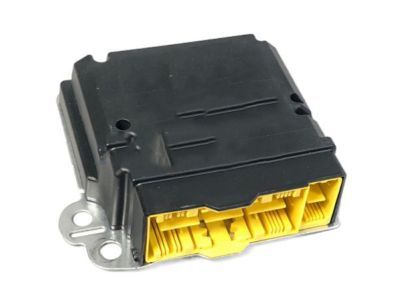
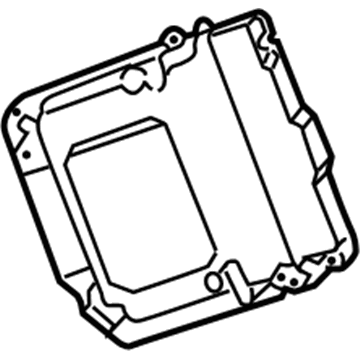
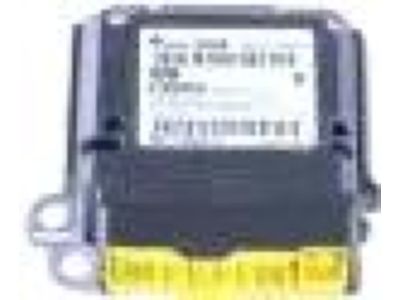
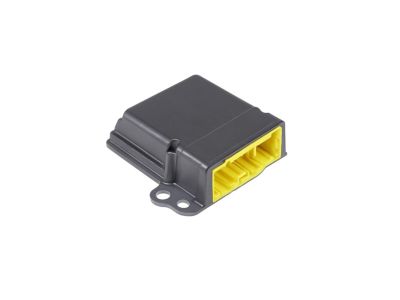
Jeep Grand Cherokee Occupant Restraint Module
Part Number: 68316742AB$480.70 MSRP: $729.00You Save: $248.30 (35%)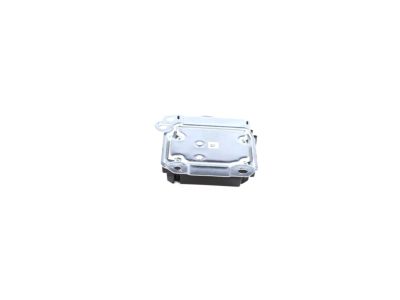
Jeep Grand Cherokee Occupant Restraint Module
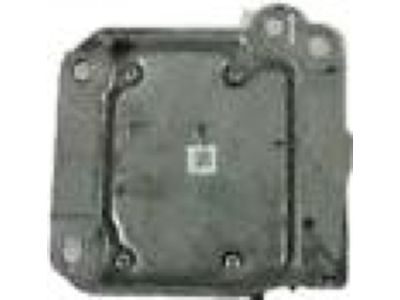
Part Number: 68355363AB$530.20 MSRP: $802.92You Save: $272.72 (34%)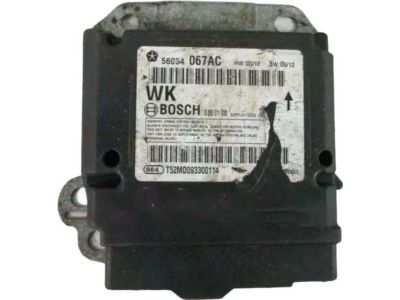
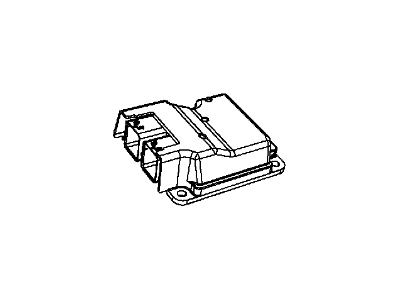
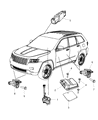
Jeep Grand Cherokee Occupant Restraint Module
Part Number: 56054067AC$526.90 MSRP: $799.00You Save: $272.10 (35%)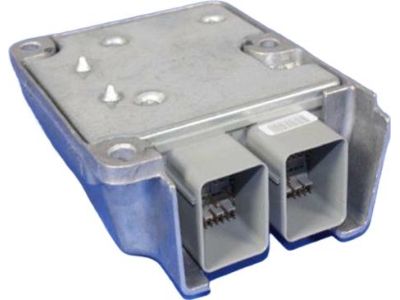
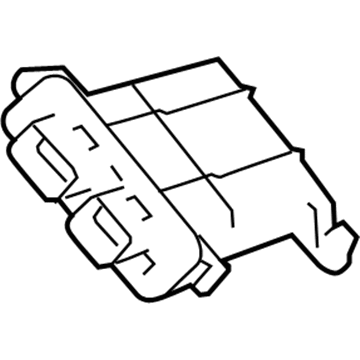
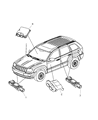
Jeep Grand Cherokee Occupant Restraint Module
Part Number: 56010426AJ$342.21 MSRP: $408.00You Save: $65.79 (17%)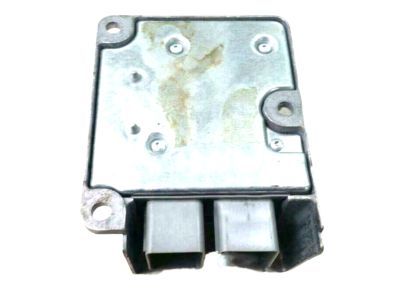
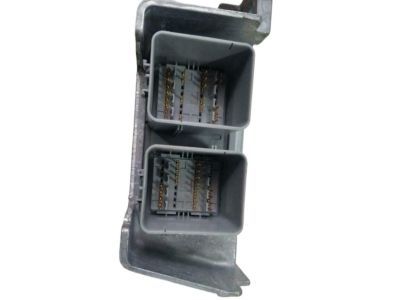
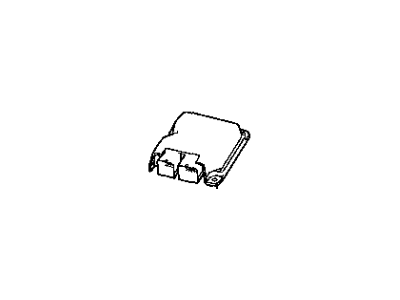
Jeep Grand Cherokee Occupant Restraint Module
Part Number: 56010426AH$274.10 MSRP: $408.00You Save: $133.90 (33%)
Jeep Grand Cherokee Occupant Restraint Module
Part Number: 68675765AA$270.95 MSRP: $405.00You Save: $134.05 (34%)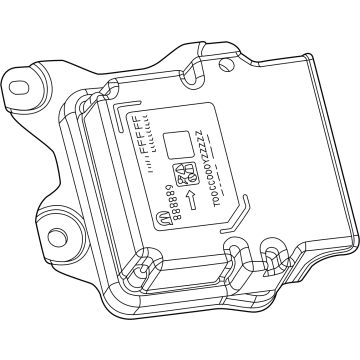
Jeep Grand Cherokee Occupant Restraint Module
Part Number: 68621834AA$716.10 MSRP: $1085.00You Save: $368.90 (34%)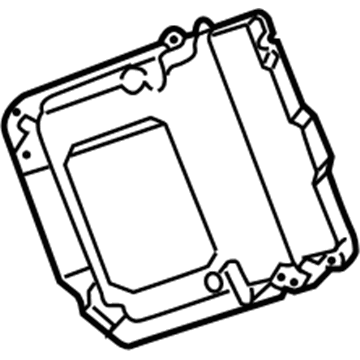
Jeep Grand Cherokee Occupant Restraint Module
Part Number: 68222877AA$526.90 MSRP: $799.00You Save: $272.10 (35%)Jeep Grand Cherokee Occupant Restraint Module
Part Number: 68675764AA$254.22 MSRP: $380.00You Save: $125.78 (34%)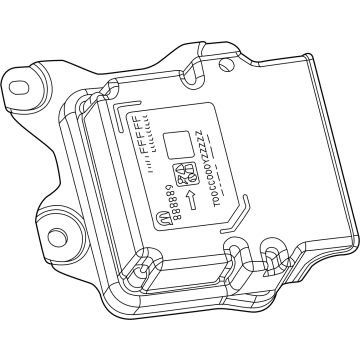
Jeep Grand Cherokee Occupant Restraint Module
Part Number: 68631463AA$238.61 MSRP: $359.00You Save: $120.39 (34%)
Jeep Grand Cherokee Occupant Restraint Module
Part Number: 68309533AA$474.10 MSRP: $718.00You Save: $243.90 (34%)Jeep Grand Cherokee Occupant Restraint
Part Number: 68588643AB$237.50 MSRP: $359.00You Save: $121.50 (34%)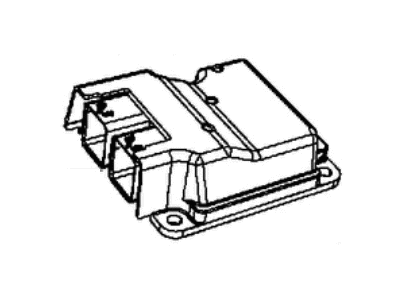
Jeep Grand Cherokee Occupant Restraint Module
Part Number: 68367618AA$311.09 MSRP: $471.00You Save: $159.91 (34%)Jeep Grand Cherokee Occupant Restraint
Part Number: 68459138AE$82.34 MSRP: $122.00You Save: $39.66 (33%)
Jeep Grand Cherokee Occupant Classification Module
Part Number: 56043195AS$380.15 MSRP: $555.00You Save: $174.85 (32%)Jeep Grand Cherokee Occupant Restraint Module
Part Number: 56010425AH$543.78 MSRP: $799.00You Save: $255.22 (32%)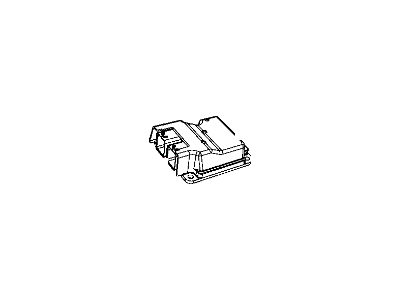
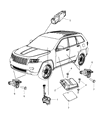
Jeep Grand Cherokee Occupant Restraint Module
Part Number: 68025654AI$441.18 MSRP: $648.00You Save: $206.82 (32%)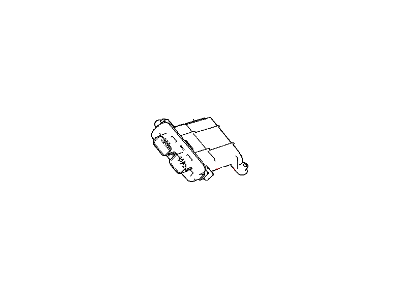
Jeep Grand Cherokee Occupant Restraint Module
Part Number: 4896099AA$448.02 MSRP: $655.00You Save: $206.98 (32%)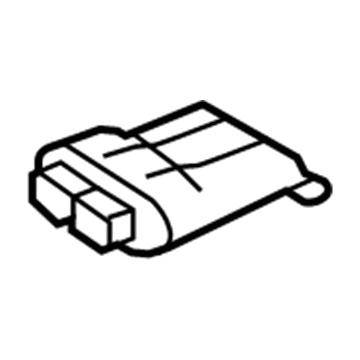
Jeep Grand Cherokee Occupant Classification Module
Part Number: 5183712AA$264.62 MSRP: $336.73You Save: $72.11 (22%)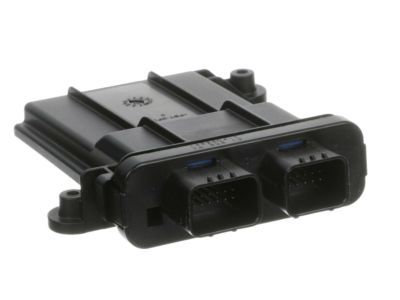
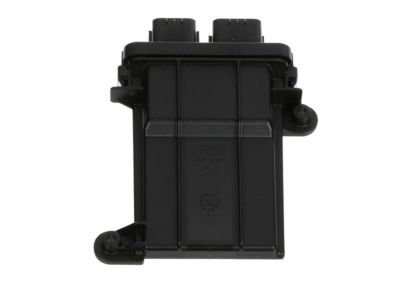
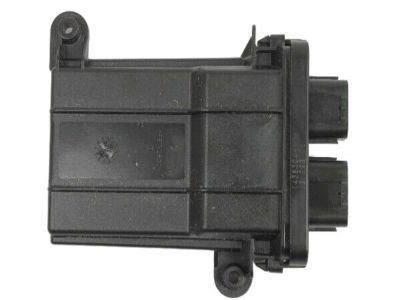
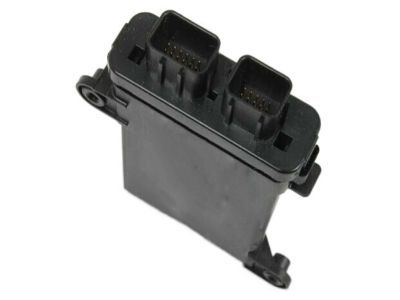
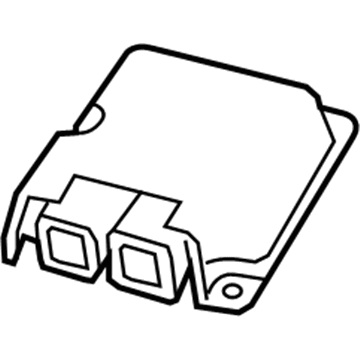
Jeep Grand Cherokee Occupant Classification Module
Part Number: 56043195AZ$380.15 MSRP: $555.00You Save: $174.85 (32%)
| Page 1 of 2 |Next >
1-20 of 40 Results
Jeep Grand Cherokee Air Bag Control Module
Jeep Grand Cherokee Air Bag Control Module supervises crash sensing to inflate airbags at the critical moment. Inside every Grand Cherokee, the Air Bag Control Module polls impact sensors each startup, drawing battery and reserve power to run a self-test and flash the dash light. When it identifies a serious frontal hit, the Air Bag Control Module commands the inflator to ignite modern nitrogen producing propellant, instantly filling the fabric cushions that shield driver and passenger. Earlier Grand Cherokee versions applied a single driver bag, while later models adopted twin front bags, all directed by a smarter Air Bag Control Module that also records crash data. Across the timeline, Jeep replaced bulky compressed gas bladders with compact solid propellant, trimmed wiring, and improved self-testing so the Grand Cherokee system now performs a rapid check every time the key turns. Thanks to this evolution, the Air Bag Control Module in today's Jeep provides quick deployment, reliable memory of impact events, and seamless integration with other safety electronics, making Jeep occupants markedly safer during head-on collisions.
Looking for affordable and high-quality auto parts? Then you have already arrived at the proper online shop. We offer all Jeep Grand Cherokee Air Bag Control Module at great affordable prices. Moreover, all genuine Jeep Grand Cherokee Air Bag Control Module come with a manufacturer's warranty. In the long run, you would realize you have saved a lot of trouble and money with OEM parts from here.
Jeep Grand Cherokee Air Bag Control Module Parts Questions & Experts Answers
- Q:What are the steps and precautions for servicing the front air bag and air bag control module on Jeep Grand Cherokee?A:These models are equipped with a Supplemental Restraint System (SRS), commonly known as an airbag system, featuring at least two airbags for the driver and front seat passenger, designed to protect occupants from serious injury during a head-on or frontal collision. The airbag control module is situated on the transmission tunnel beneath the center of the instrument panel, with some models offering optional side curtain airbags identifiable by the "SRS - AIRBAG" logo on the headliner above the B-pillar. The airbag module contains the airbag and inflater unit, which inflates the bag almost instantaneously upon receiving an electrical signal from the airbag control module via a "clockspring," a flat, ribbon-like electrically conductive tape. The passenger's airbag is located in the dashboard above the glove box, with an ON/OFF switch for deactivating it when transporting an infant or young child in a safety seat; removal of the airbag is not recommended unless it has been activated in an accident. Optional side-curtain airbags are positioned on each roof side rail and extend from the A-pillar to the C-pillar, and should only be removed if deployed in an accident. The Airbag Control Module (ACM) monitors the airbag system, illuminating an indicator light during startup to indicate proper operation; if a fault is detected, it stores a Diagnostic Trouble Code (DTC) and keeps the light on until repaired. The ACM controls standard driver and passenger airbags, while vehicles with side-curtain airbags also have Side Impact Airbag Control Modules (SIACMs) located behind the B-pillar trim. When servicing components near the SRS system, it is crucial to disable the system to prevent accidental deployment, which involves turning off the ignition, disconnecting the negative battery terminal, and waiting at least two minutes. To enable the system, the ignition should be turned off, the negative battery terminal reconnected, and the ignition turned on while ensuring no body is in front of the airbags, checking that the indicator light functions correctly. The front passenger's seat includes a weight sensor module as part of the Occupant Classification System (OCS), which is critical for airbag deployment; if the seat is removed, no one should sit in it until the airbag and OCS have been verified by a dealer service department to prevent serious injury or death in an accident.
Related Jeep Grand Cherokee Parts
 Jeep Grand Cherokee Engine Cover
 Jeep Grand Cherokee Sunroof
 Jeep Grand Cherokee Spoiler
 Jeep Grand Cherokee License Plate
 Jeep Grand Cherokee Air Bag
 Jeep Grand Cherokee Car Key
 Jeep Grand Cherokee Clock Spring
 Jeep Grand Cherokee Spare Wheel
Browse by Year
2025 Air Bag Control Module 2024 Air Bag Control Module 2023 Air Bag Control Module 2022 Air Bag Control Module 2021 Air Bag Control Module 2020 Air Bag Control Module 2019 Air Bag Control Module 2018 Air Bag Control Module 2017 Air Bag Control Module 2016 Air Bag Control Module 2015 Air Bag Control Module 2014 Air Bag Control Module 2013 Air Bag Control Module 2012 Air Bag Control Module 2011 Air Bag Control Module 2010 Air Bag Control Module 2009 Air Bag Control Module 2008 Air Bag Control Module 2007 Air Bag Control Module 2006 Air Bag Control Module 2005 Air Bag Control Module 2004 Air Bag Control Module 2003 Air Bag Control Module 2002 Air Bag Control Module 2001 Air Bag Control Module 1996 Air Bag Control Module 1995 Air Bag Control Module 1994 Air Bag Control Module 1993 Air Bag Control Module