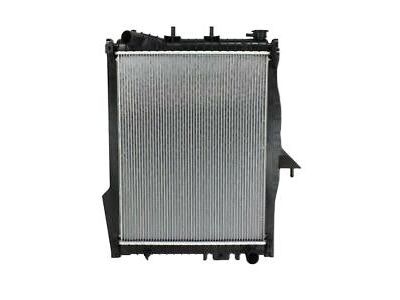
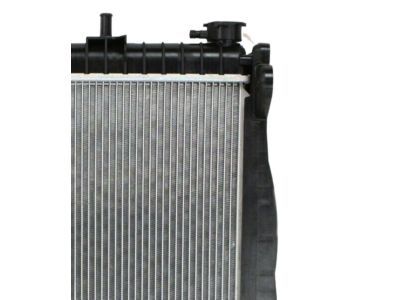
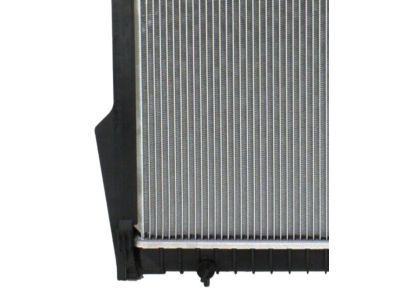
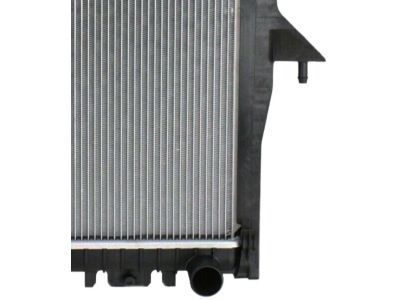
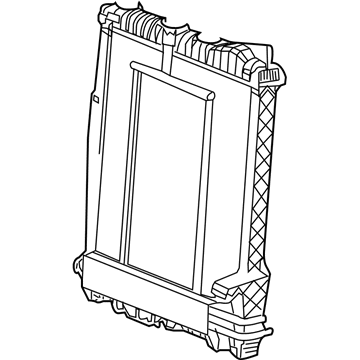
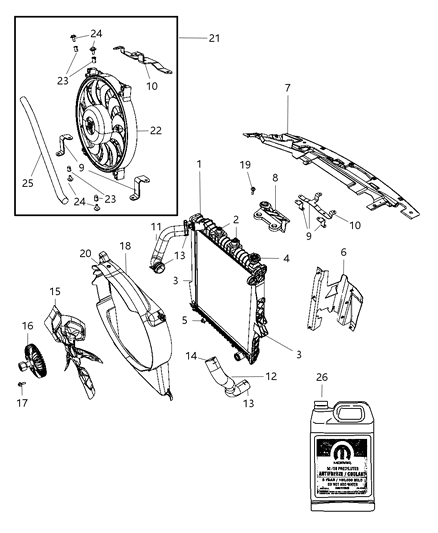
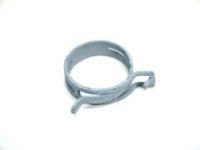
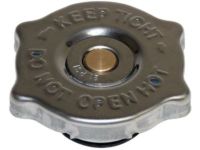
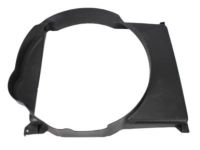
Take the cable off of the negative battery terminal. Since the coolant seems fresh and good, pull it out from the system and keep it to reuse later. Pushpin fasteners secure the cover for the radiator support. Take them out to remove the cover. On Durango models, remove the air filter housing. Take off the hose bolted to the coolant reservoir and remove it from the radiator. Lift the cooler off its mounting where it meets the radiator and then unscrew all the attaching bolts. Disconnect the transmission fluid lines and disconnect the oil cooler, if it's in that spot. Undo the clamps on both ends of the hoses, and slide the hoses off the radiator connections. If the hoses won't come off by hand, grab them near the end with adjustable pliers, turn the seals to break them, and pull carefully, avoiding deforming the radiator fittings. Get rid of your old hoses and put fresh ones on. Pull the fan guard off the radiator, and move it just above the fan. Unbolt the bracket that holds the radiator onto the tank. Be very careful when pulling the radiator out from under the hood - make sure to prevent spillage and paint damage, while keeping away from hitting the transmission and power steering cooling fin areas. Take note of where the rubber mounting cushions are when you take out the radiator. Swap out any that are dull, bloated, and not working correctly. Examine your radiator with no water in it to check for leakage and damage. Give the work to radiator shops or dealer repair teams, since this job demands specialist tools and procedures. First use a water hose to clean off bugs and dirt from the radiator front, then clean any remaining debris with compressed air and a soft brush, always be careful not to break the radiator's cooling fins. Check the radiator mountings for wear before putting in the radiator and make sure nothing gets caught in them. To reinstall the radiator, start by tightening all the mounting bracket fastener bolts. Following installation, adjust the cooling system to match antifreeze and water mix, while also checking and refilling automatic transmission and power steering fluids. Start the car engine, check for leaks, let it warm up at normal running temperature until the input radiator pipe gets warm, then recheck the coolant level and adjust as needed.