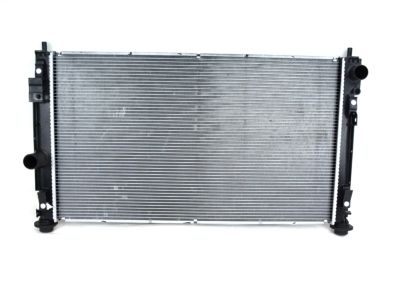
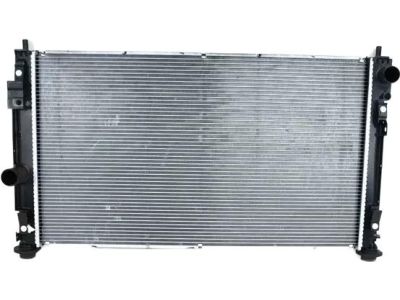
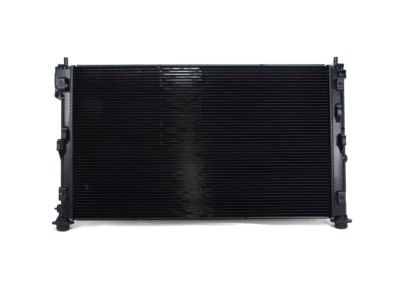
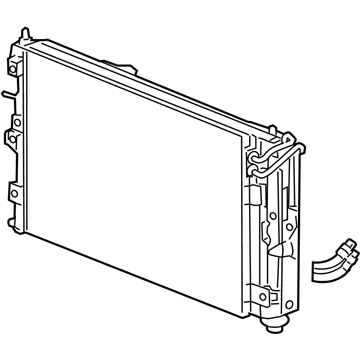
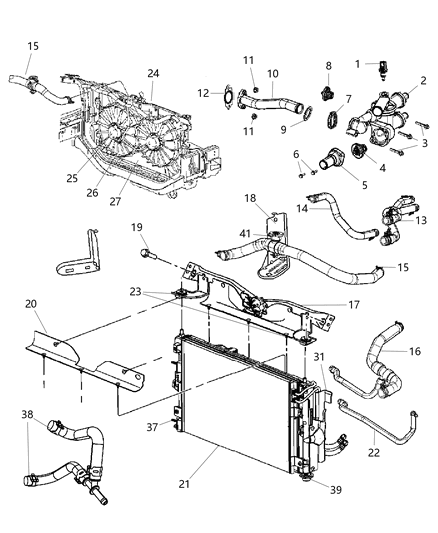
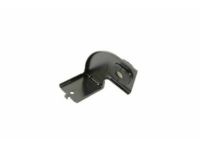
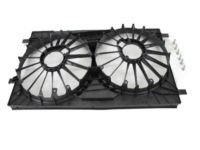
In 2010 vehicles and before, start with a service technician who recovers the air conditioning's refrigerant and discharges the system. Before working on the car, cut the battery's negative cable connected to its remote ground. Pull the hand brake, lift up the front end of your car, and use jackstands to hold it up while you work. Take off three maintenance parts - engine cover, air filter, and intake hose assembly. To start, drain the radiator and take off the front bumper cover. Take the electrical horn wires off, loosen the bolt, and take the horn out of its place on the upper radiator support frame. Turn off power by grounding the power receiver or battery. While applying the parking brake, raise the car and support it on safe stands. Remove hose connections from the radiator and take off the electrical plugs for the radiator fan. Pull off both A/C lines from the condenser unit and the transmission cooler to move them out of the way. The radiator screws onto the support frame with plastic clips above. To let it loose, squeeze the clips together and pull the radiator/rear condenser toward you. Remove both parts and take out the condenser by removing bolts and unhooking plastic stays. Bring your damaged or leaking radiator to a shop or dealership's service system for repair. Wash off the dirt and bugs on the radiator's back side with a garden hose, then get it cleaned out before putting it back. If your radiator supports are worn out, get new ones. Installation works the opposite way: attach the A/C and radiator together, push the bottom fill to mount it properly, and make sure the two flexible air seals are where they should be. Pour exactly the right blend of antifreeze and water into the vehicle's cooling system once you put it back together. Turn the engine on and look for leaks, giving it time to warm up normally until the top radiator hose gets hotter. Ask someone to refill the coolant and have the shop that removed your AC system recirculate the pressurized gas for you.