
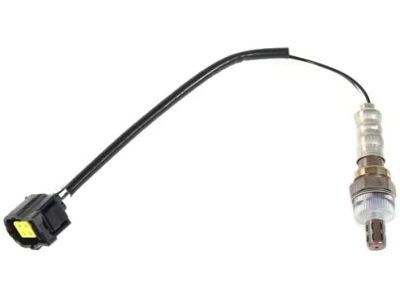
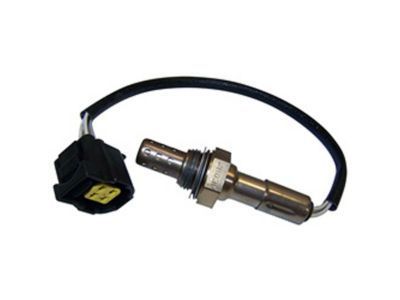
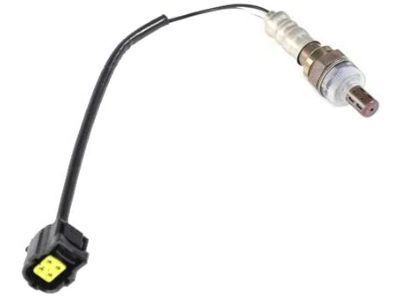
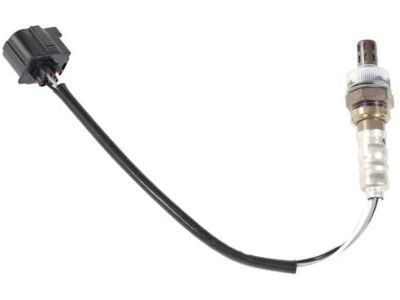
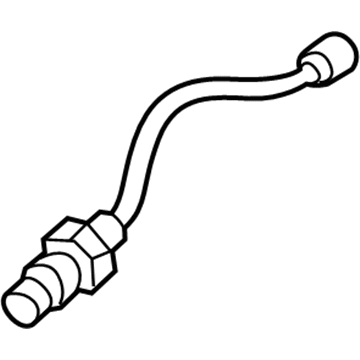
Make sure this part fits

Jeep 56029049AA Oxygen Sensor

2004-2012 Jeep 56029049AA

Customer Questions & Expert Answers (26)
56029049AA Mopar Oxygen Sensor Product Photo 1 of 4
  • Part Description
    Sensor-Oxygen
  • Manufacturer
    Mopar
Make sure this part fits
$103.50 MSRP: $154.00
You Save: $50.50 (33%)
1
ADD TO CART
  • Related Parts
  • Specifications
  • Fitment
  • Q&A
  • Product Specifications

    BrandGenuine Jeep
    Manufacturer Part Number56029049AA
    Part DescriptionSensor-Oxygen
    Item Dimensions1.9 x 3.3 x 5.6 inches
    Item Weight0.40 Pounds
    ConditionNew
    ManufacturerMopar
    SKU56029049AA
    WarrantyThis genuine Mopar part is guaranteed by Mopar's factory warranty.
    Shipping & ReturnShipping Policy Return Policy
    Warning: California's Proposition 65
  • Vehicle Fitment

    Year Make Model Engine Important vehicle option details
    2006-2010 Jeep Commander6 Cyl 3.7L, 8 Cyl 4.7L, 8 Cyl 5.7LBase 2WD, Base 4WD, Limited 2WD, Limited 4WD, Overland 2WD, Overland 4WD, Sport 2WD, Sport 4WD
    2005-2010 Jeep Grand Cherokee6 Cyl 3.7L, 8 Cyl 4.7L, 8 Cyl 5.7L, 8 Cyl 6.1LLaredo 2WD, Laredo 4WD, Limited 2WD, Limited 4WD, Overland 2WD, Overland 4WD, SRT8 4WD
    2004-2012 Jeep Liberty4 Cyl 2.4L, 6 Cyl 3.7LLimited Edition 2WD, Limited Edition 4WD, Limited JET Edition 2WD, Limited JET Edition 4WD, Renegade 2WD, Renegade 4WD, Sport 2WD, Sport 4WD
    2005-2009 Jeep Wrangler4 Cyl 2.4L, 6 Cyl 3.8L, 6 Cyl 4.0LRubicon, Sahara, SE, Sport, Unlimited, Unlimited Rubicon, Unlimited Sahara 2WD, Unlimited Sahara 4WD, Unlimited X 2WD, Unlimited X 4WD, Unlimited X RHD 4WD, X, X RHD
  • Customer Questions & Expert Answers

    Q:
    Please cross check for fit. Posted by MoparPartsGiant Specialist
    A:
    You can Select Your Vehicle to check if 56029049AA fits your vehicle.
    Posted by MoparPartsGiant Specialist
    Installation and Repair Tips
    Q:
    What special care is essential when servicing an oxygen sensor or air/fuel ratio sensor on Chrysler PT Cruiser? Posted by Customer
    A:
    Particular caution needed when working on an oxygen sensor or air/fuel ratio sensor because the pigtail and electrical connector are always integrated; if they are damaged the sensor must be replaced. The electrical connector and the louvered end of the sensor must not be greased, must not accumulate dirt and other contaminants and only mild detergents must be used while cleaning these sensors. Furthermore, do not drop the sensors or handle them roughly, also make sure the blue silicone boot is properly fixed in place so it will not melt and so that the sensor works properly. For replacement, know that the nut on an oxygen sensor may seize up when the engine is cold, so one has to start the engine for a while. First of all ensure you have separated the wire from the negative terminal and then safely lifted the car on jackstands. The upstream oxygen sensor is mounted on top of the exhaust manifold and can be removed by pulling on the electrical connector and loosening the sensor with a unique socket and if the old sensor is being reinstalled the threads of the sensor bore should be cleaned and the sensor threads should be coated in anti seize compound and this obviously does not apply to new sensors. The downstream oxygen sensor procedure is the same to the upstream oxygen sensor that is on the left side of the top of catalytic converter, and that involves removing and disconnecting the electrical lead, removing the sensor, and then cleaning the threads of the sensor; if you are reusing the old sensor apply anti-seize compound before putting the sensor in. Lasty, add the downstream sensor and make sure that it is properly fixed by tightening it, proceeding in the reverse sequence.
    Posted by MoparPartsGiant Specialist
    Q:
    How Should I Be Particularly Careful When Servicing an Oxygen Sensor on Chrysler Sebring? Posted by Customer
    A:
    Oxygen sensors are delicate, so handle them carefully. For the 2.4L engine (2014 and earlier), the upstream sensor is near the exhaust manifold, while on all other engines, the left and right upstream sensors are at the top of the catalytic converters. The downstream sensors are on the side of each catalytic converter. To remove the sensor, disconnect the wire harness and connector, and unscrew the sensor using a special oxygen sensor socket. Clean the threads of the sensor bore if reusing the old sensor, and apply anti-seize compound to the threads if necessary. Install the sensor and tighten it to the specified torque.
    Posted by MoparPartsGiant Specialist
    Q:
    How Should Special Care Be Taken When Servicing an Oxygen Sensor on Dodge Caravan? Posted by Customer
    A:
    Special care must be taken when servicing an oxygen sensor. The upstream sensor is located on top of the exhaust manifold for 2.4L four-cylinder engines and on top of the rear exhaust manifold for 3.3L/3.8L V6 engines. The downstream sensor is located on the side of the catalytic converter. The electrical lead should be traced and disconnected, and then the sensor can be unscrewed. The threads of the sensor bore should be cleaned and anti-seize compound should be applied to the threads if reusing the old sensor. The sensor should be installed and tightened securely. The installation process is the reverse of removal.
    Posted by MoparPartsGiant Specialist
    Q:
    How Should I Be Particularly Careful When Servicing an Oxygen Sensor on Dodge Avenger? Posted by Customer
    A:
    Oxygen sensors are delicate, so handle them carefully. For the 2.4L engine (2014 and earlier), the upstream sensor is near the exhaust manifold, while on all other engines, the left and right upstream sensors are at the top of the catalytic converters. The downstream sensors are on the side of each catalytic converter. To remove the sensor, disconnect the wire harness and connector, and unscrew the sensor using a special oxygen sensor socket. Clean the threads of the sensor bore if reusing the old sensor, and apply anti-seize compound to the threads if necessary. Install the sensor and tighten it to the specified torque.
    Posted by MoparPartsGiant Specialist
    Q:
    How Should Special Care Be Taken When Servicing an Oxygen Sensor on Chrysler Town & Country? Posted by Customer
    A:
    Special care must be taken when servicing an oxygen sensor. The upstream sensor is located on top of the exhaust manifold for 2.4L four-cylinder engines and on top of the rear exhaust manifold for 3.3L/3.8L V6 engines. The downstream sensor is located on the side of the catalytic converter. The electrical lead should be traced and disconnected, and then the sensor can be unscrewed. The threads of the sensor bore should be cleaned and anti-seize compound should be applied to the threads if reusing the old sensor. The sensor should be installed and tightened securely. The installation process is the reverse of removal.
    Posted by MoparPartsGiant Specialist
    Q:
    What is the role of oxygen sensors in emissions and fuel management on Dodge Challenger? Posted by Customer
    A:
    The oxygen in the exhaust mix with such elements in the oxygen sensor to produce a voltage output of between 0.1v high oxygen, or lean mixture, and 0.9v low oxygen or rich mixture. The preconverter oxygen sensor, located upstream of the catalytic converter, provides a feed back signal to the PCM as to the amount of oxygen remaining in the exhaust, which the PCM constantly samples in order to adjust the fuel injector pulse width to maintain a stoichiometric air/fuel ratio of 14.7:1 for emissions, fuel economy and power. Unlike the upstream oxygen sensor after the catalytic converter, the so-called second oxygen sensor does not participate in the regulation of air/fuel ratio by the PCM but is used for evaluating the efficiency of the catalytic converter; it has a slower and oscillating voltage signal due to a lack of oxygen. Car manufacturers usually install four oxygen sensors; two of them are located upstream while the other two are downstream; upstream sensors are installed within the exhaust manifolds while downstream sensors are installed behind the catalytic converters. An oxygen sensor does not produce voltage below what seems to be its working temperature of around 600 degrees F; the PCM works in an open-loop fuel control mode relying on data received from other sensors during this time. Electric connections, supply of air, working temperature and unleaded fuel are vital in the good working of this oxygen sensor. The PCM can detect different types of oxygen sensor problems and set DTCs to signal specific problems, and go to open-loop fuel control when a DTC is present. For replacement, it is recommended to make the engine start for several turns in order to ease the process of the oxygen sensor's removal because of the constant contraction of the exhaust pipe. Upstream sensors are reached from the underside of the vehicle and downstream sensors are situated after the catalytic converters. When fitting a new sensor use a clean rag to clean the threads, if reusing the old sensor apply anti-seize compound, however new anti-seize compound pre-coated on new sensors. Turning off the negative terminal of battery for few minutes readjusts the PCM to the new sensor, but it will in the mean time have an impact on the engine performance since the PCM is now in the learning mode of different MPa.
    Posted by MoparPartsGiant Specialist
    Q:
    How to Replace the Camshaft Position Sensor,Coolant Temperature Sensor,Knock Sensor,MAP Sensor,Oxygen Sensor,Speed Sensor and Throttle Position Sensor on Dodge Grand Caravan? Posted by Customer
    A:
    To remove the camshaft reference sensor on 3.3L and 3.8L models, detach the sensor lead, loosen the bolt, and remove the sensor. If reusing, clean the sensor face and replace the spacer and O-ring. To install a new sensor, ensure it has a paper spacer and mount the O-ring. For the charge temperature sensor, unplug the connector, replace the sensor, and secure it with tape. For the coolant sensor, replace the cap, and the sensor, and check the coolant level. For the crankshaft sensor, unplug the connector, loosen the bolt, remove the sensor, and replace the spacer if reusing. For the TPS, check resistance readings, and replace if it is incorrect.
    Posted by MoparPartsGiant Specialist
    Q:
    What Role Do Oxygen Sensors Play in a Dodge Magnum? Posted by Customer
    A:
    Oxygen sensors play a vital role in monitoring the air/fuel ratio and catalytic converter efficiency. There are four sensors, two upstream in the exhaust manifolds and two downstream behind the converters. The pre-converter sensor provides feedback to the PCM to adjust the fuel injector pulse width and control the air/fuel ratio. The post-converter sensor monitors the efficiency of the converter. An oxygen sensor requires good electrical connections, proper air circulation, correct operating temperature, and unleaded fuel to function correctly. When replacing a sensor, use an oxygen sensor socket and clean the threads before installation. After replacing, disconnect the battery for a few minutes to allow the PCM to learn the new sensor.
    Posted by MoparPartsGiant Specialist
    Q:
    What is the Function of an Oxygen Sensor in the Exhaust System on Dodge Nitro? Posted by Customer
    A:
    The oxygen sensor in the exhaust system reacts with oxygen to produce a voltage output that varies depending on the oxygen content. This feedback signal is used by the PCM to determine the required fuel injector pulse width and control the air/fuel ratio. The ideal ratio is 14.7:1 for minimum emissions and optimal fuel economy and performance. The post-converter oxygen sensor monitors the efficiency of the catalytic converter. The sensor configuration varies depending on the engine model. The PCM operates in an open-loop fuel control mode until the sensor reaches its operating temperature. Proper operation of the sensor depends on electrical connections, air supply, operating temperature, and the use of unleaded fuel. The PCM can detect sensor problems and set diagnostic trouble codes. When replacing the sensor, precautions should be taken to avoid damage or contamination. The sensor should be installed using anti-seize compound on the threads.
    Posted by MoparPartsGiant Specialist
    Q:
    How Does an Oxygen Sensor Work in a Dodge Ram 1500's Exhaust System? Posted by Customer
    A:
    The oxygen sensor in a vehicle's exhaust system reacts with the oxygen to produce a voltage output that varies depending on the oxygen content. This feedback signal is used by the PCM to determine the required fuel injector pulse width and control the air/fuel ratio. The pre-converter oxygen sensor provides this feedback, while the post-converter sensor is used to monitor the efficiency of the catalytic converter. The PCM operates in an open-loop fuel control mode until the sensor reaches its operating temperature of around 600 degrees F. The sensor requires good electrical connections, air circulation, correct operating temperature, and unleaded fuel to operate correctly. The PCM can detect sensor problems and set Diagnostic Trouble Codes. To replace the oxygen sensor, raise the vehicle, locate the sensor and disconnect the electrical connector, remove the sensor using a wrench or oxygen sensor socket, clean the threads, and apply anti-seize compound if reusing the old sensor. Installation is the reverse of removal.
    Posted by MoparPartsGiant Specialist
    Q:
    How Does an Oxygen Sensor Work in a Dodge Ram 3500's Exhaust System? Posted by Customer
    A:
    The oxygen sensor in a vehicle's exhaust system reacts with the oxygen to produce a voltage output that varies depending on the oxygen content. This feedback signal is used by the PCM to determine the required fuel injector pulse width and control the air/fuel ratio. The pre-converter oxygen sensor provides this feedback, while the post-converter sensor is used to monitor the efficiency of the catalytic converter. The PCM operates in an open-loop fuel control mode until the sensor reaches its operating temperature of around 600 degrees F. The sensor requires good electrical connections, air circulation, correct operating temperature, and unleaded fuel to operate correctly. The PCM can detect sensor problems and set Diagnostic Trouble Codes. To replace the oxygen sensor, raise the vehicle, locate the sensor and disconnect the electrical connector, remove the sensor using a wrench or oxygen sensor socket, clean the threads, and apply anti-seize compound if reusing the old sensor. Installation is the reverse of removal.
    Posted by MoparPartsGiant Specialist
    Q:
    How Does an Oxygen Sensor Work in a Dodge Ram 2500's Exhaust System? Posted by Customer
    A:
    The oxygen sensor in a vehicle's exhaust system reacts with the oxygen to produce a voltage output that varies depending on the oxygen content. This feedback signal is used by the PCM to determine the required fuel injector pulse width and control the air/fuel ratio. The pre-converter oxygen sensor provides this feedback, while the post-converter sensor is used to monitor the efficiency of the catalytic converter. The PCM operates in an open-loop fuel control mode until the sensor reaches its operating temperature of around 600 degrees F. The sensor requires good electrical connections, air circulation, correct operating temperature, and unleaded fuel to operate correctly. The PCM can detect sensor problems and set Diagnostic Trouble Codes. To replace the oxygen sensor, raise the vehicle, locate the sensor and disconnect the electrical connector, remove the sensor using a wrench or oxygen sensor socket, clean the threads, and apply anti-seize compound if reusing the old sensor. Installation is the reverse of removal.
    Posted by MoparPartsGiant Specialist
    Q:
    How Does an Oxygen Sensor Work in a Ram 2500's Exhaust System? Posted by Customer
    A:
    The oxygen sensor in a vehicle's exhaust system reacts with the oxygen to produce a voltage output that varies depending on the oxygen content. This feedback signal is used by the PCM to determine the required fuel injector pulse width and control the air/fuel ratio. The pre-converter oxygen sensor provides this feedback, while the post-converter sensor is used to monitor the efficiency of the catalytic converter. The PCM operates in an open-loop fuel control mode until the sensor reaches its operating temperature of around 600 degrees F. The sensor requires good electrical connections, air circulation, correct operating temperature, and unleaded fuel to operate correctly. The PCM can detect sensor problems and set Diagnostic Trouble Codes. To replace the oxygen sensor, raise the vehicle, locate the sensor and disconnect the electrical connector, remove the sensor using a wrench or oxygen sensor socket, clean the threads, and apply anti-seize compound if reusing the old sensor. Installation is the reverse of removal.
    Posted by MoparPartsGiant Specialist
    Q:
    How Does an Oxygen Sensor Work in a Ram 3500's Exhaust System? Posted by Customer
    A:
    The oxygen sensor in a vehicle's exhaust system reacts with the oxygen to produce a voltage output that varies depending on the oxygen content. This feedback signal is used by the PCM to determine the required fuel injector pulse width and control the air/fuel ratio. The pre-converter oxygen sensor provides this feedback, while the post-converter sensor is used to monitor the efficiency of the catalytic converter. The PCM operates in an open-loop fuel control mode until the sensor reaches its operating temperature of around 600 degrees F. The sensor requires good electrical connections, air circulation, correct operating temperature, and unleaded fuel to operate correctly. The PCM can detect sensor problems and set Diagnostic Trouble Codes. To replace the oxygen sensor, raise the vehicle, locate the sensor and disconnect the electrical connector, remove the sensor using a wrench or oxygen sensor socket, clean the threads, and apply anti-seize compound if reusing the old sensor. Installation is the reverse of removal.
    Posted by MoparPartsGiant Specialist
    Q:
    What is the purpose of the post-converter Oxygen Sensor for the 2006 Chrysler 300? Posted by Customer
    A:
    The post-converter oxygen sensor, although not used for air/fuel ratio control, is used by the PCM to monitor the efficiency of the catalytic converter.
    Posted by MoparPartsGiant Specialist
    Q:
    How can the PCM detect Oxygen Sensor problems for the 2007 Dodge Charger? Posted by Customer
    A:
    The PCM can detect oxygen sensor problems and set Diagnostic Trouble Codes (DTCs) to indicate specific faults.
    Posted by MoparPartsGiant Specialist
    Q:
    What is required for the Oxygen Sensor to operate correctly for the 2005 Dodge Dakota? Posted by Customer
    A:
    The oxygen sensor needs good electrical connections, sufficient air supply, to reach the correct operating temperature, and to use unleaded fuel in order to operate correctly.
    Posted by MoparPartsGiant Specialist
    Q:
    What is the ideal air/fuel ratio for minimum emissions and fuel economy for the 2009 Dodge Durango, considering the role of the Oxygen Sensor? Posted by Customer
    A:
    The ideal ratio for minimum emissions and fuel economy is 14.7 parts air to 1 part fuel.
    Posted by MoparPartsGiant Specialist
    Q:
    What does the Oxygen Sensor in the exhaust system do for the 2009 Jeep Grand Cherokee? Posted by Customer
    A:
    The oxygen sensor in the exhaust system reacts with the elements to produce a voltage output that varies based on the amount of oxygen in the exhaust. This feedback signal is used by the PCM to determine the required fuel injector pulse width and control the air/fuel ratio.
    Posted by MoparPartsGiant Specialist
    Q:
    How does the PCM operate in an open-loop fuel control mode for the 2012 Jeep Liberty when considering the Oxygen Sensor? Posted by Customer
    A:
    The PCM operates in an open-loop fuel control mode until the sensor reaches its operating temperature.
    Posted by MoparPartsGiant Specialist
    Q:
    How do you remove the emission maintenance timer for the 2009 Jeep Wrangler with an Oxygen Sensor? Posted by Customer
    A:
    To remove the emission maintenance timer, unplug the electrical connector, remove the screws, and lower the timer from the instrument panel. Installation is the reverse of removal.
    Posted by MoparPartsGiant Specialist
    Q:
    What conditions are required for the Oxygen Sensor to operate correctly for the 2013 Ram 1500? Posted by Customer
    A:
    The oxygen sensor requires good electrical connections, air circulation, correct operating temperature, and unleaded fuel to operate correctly.
    Posted by MoparPartsGiant Specialist
    See Complete Installation and Repair Tips
    Q:
    My car needs the P0131 o2 sensor 1/1 circuit low I cannot determine if it's the same as I selected - Part no. 56029049AA? Posted by Customer: 2011 Dodge Nitro
    A:
    56029049AA IS THE SAME PART NUMBER FOR ALL 4 OF YOUR O2 SENSORS. THANK YOU
    Posted by MoparPartsGiant Specialist 3/4/2025
    Q:
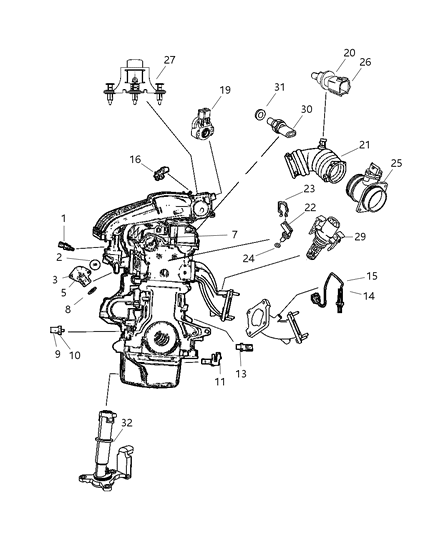
    I noticed that there is another oxygen sensor part # 4606135AD which is also listed as the correct oxygen sensor for this application. I'm trying to determine which oxygen sensor is the correct part for the #2 location in the diagram provided for this parts location on my vehicle. Is oxygen sensor #56029049AA the same as #4606135AD or will my cars manufacture date determine which one I am suppose to use between the two of them? I've already determined that #56029050AA is what I need for the #1 oxygen sensor diagram location and only need to clarify the #2 diagram location sensor now. Thanks Posted by Customer: 2004 Dodge Stratus
    A:
    looks like that have moved number to 56029049AA from 4606135AD as it is no discontinued and the the 56029049aa is still on market and available. same situation applies to 4606555AD being replaced by 56029050AA
    Posted by MoparPartsGiant Specialist 1/4/2025
    Q:
    Hello, I understand my vehicle has 4 oxygen sensors but only 3 part numbers show up. Is one sensor interchangeable? If so, which one ? I want to purchase all 4 Posted by Customer: 2008 Jeep Wrangler
    A:
    56029085AA 56029084AA 56029049AA x2 those are the sensors you should need.
    Posted by MoparPartsGiant Specialist 5/9/2024

Genuine Mopar Part 56029049AA, the Right Choice

To ensure reliability, purchase Mopar part # 56029049AA Oxygen Sensor. It is sometimes referred to as Oxygen Sensor. The OEM parts should be used when the Mopar owners want to maximize their driving experience. The high-tech factories that produce these parts utilize sophisticated technology specifically designed to meet stringent factory requirements. Additionally, they are thoroughly tested and can thus be used with reliability by Mopar owners. This part fits specific Jeep Grand Cherokee, Liberty, and Wrangler models.

MoparPartsGiant.com is a leading supplier of genuine Mopar parts and accessories such as 56029049AA Oxygen Sensor. Wondering where to find exceptional quality and affordable OEM Mopar parts? You have already come to the right place. Our website boasts a huge selection of genuine Mopar parts at attractive prices. Further, all parts come with a manufacturer's warranty. For detailed Jeep parts information, click here.

Why choose Mopar Parts Giant

  • Dedicated Service

    Your complete satisfaction is our #1 goal

  • Lowest Prices

    Best deals on genuine OE parts from dealerships

  • Fast Delivery

    Orders are processed and delivered promptly