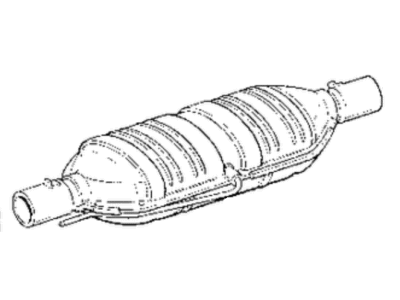
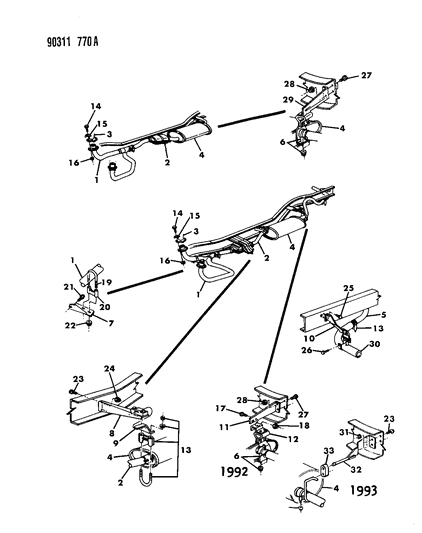
The catalytic converter is intended to minimize the emission of hydrocarbon (HC) and carbon monoxide (CO) pollutants in the exhaust since both these constituents get oxidized in the unit and get converted to water and carbon dioxide. It is located in the exhaust system and resembles a muffler, with some models featuring two converters: A structured catalyst of light-off type mounted immediately adjacent to the exhaust manifold pipe and a normal oxidation catalyst or a three-way valve catalyst type mounted at a certain distance apart. Some precautions are needed since large quantities of unburned gasoline may cause overheating, or even fire; thus, it is recommended to use only unleaded gasoline, do not leave the engine running without charging it for a long time, do not perform the compression test for an extended period, do not run the engine with the fuel tank nearly empty, do not coast with the ignition kill switch turned off, and do not dispose of a used catalytic The catalytic converter needs almost no repair, though some checks should be made if the car is lifted or the exhaust is changed. Sofar as the exhaust pipe assembly is concerned all the connections to the pipes should be tightened and all the clamps should be inspected for crack and missing fasteners, rubber hangers for a sign of deterioration. The converter itself must be checked for any sign of damages or dents on the outer layer that could influence the performance or deterioration of the health of individuals in the vicinity, the metal protector plate beneath it and the heat insulator above must be checked for any form of damages or the possibility of loose fixing screws. There's a number of points you should follow, wearing safety goggles and gloves, while replacing the catalytic converter: firstly make sure that the complete exhaust system is cool; secondly, make sure that the vehicle is securely on jack stands; third, apply penetrating oil to the clamp bolts. If fitted disconnect the downstream air injection tube then remove the bolts and rubber hangers to physically separate the converter from the exhaust pipes and remove any 'stuck' old gaskets. Removal is done in reverse order of installation; exhaust pipe gasket must be replaced together with securely tightening the clamp bolts if necessary; deteriorated rubber hangers should be replaced. Last but not the least is turning on the engine and carefully observe for exhaust losses.