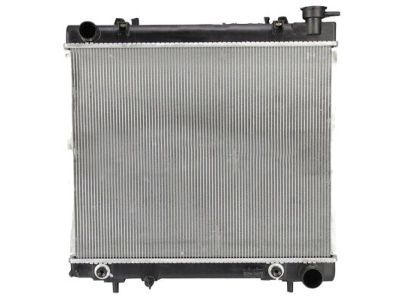
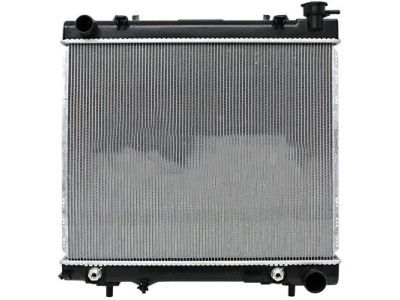
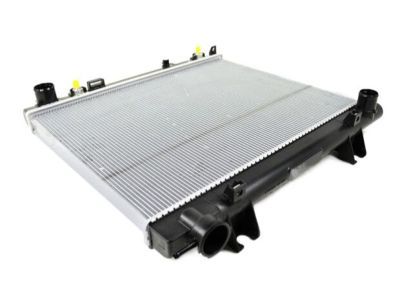
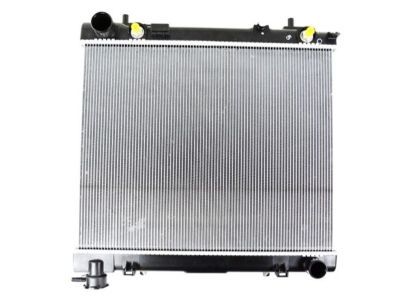
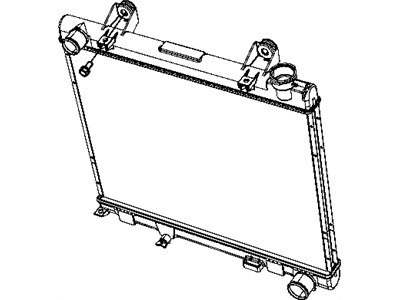
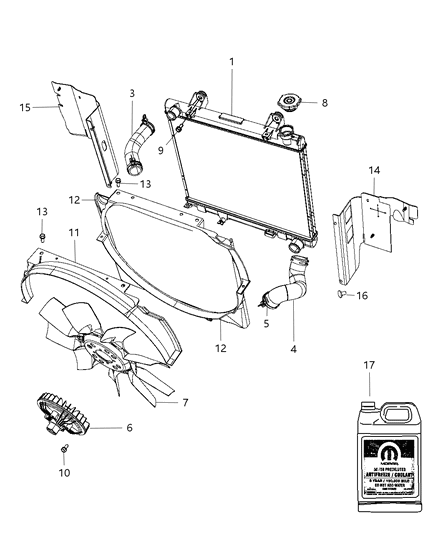
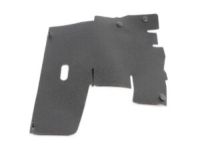
Pull the cable from the negative battery post. Save fresh and working coolant when you drain your system; you can use it again later. To uncover the radiator support, release each pushpin holder and tug on it. Release the coolant hose connection to the radiator. Pull out the screws that hold the power steering cooler to the radiator, then take it away. Disconnect the transmission cooler lines and, take out the transmission oil cooler only if needed. Take off the radiator hoses by unscrewing their hose clamps near the fittings. Adjustable pliers can help break seal connections on the hose ends. Grab each hose tightly near where it connects, twist pliers around it, until you see the connection release, then carefully pull the hose free without crushing the radiator fittings. To make sure your hoses work well, remove the bad ones and connect fresh ones directly. Pull the covering piece from the radiator so you can place it over the cooling fan. Unbolt the frame from the radiator before pulling it away from the holder molded in the engine compartment. For Dakota models, release four rubber seals from around the radiator's sides. Rise the radiator from above, taking care not to spill coolant on the car or harm its paint, and gently lift it without damaging the cooler fins that control transmission and power steering temperatures. Anytime you need to take out the radiator, remember where all rubber mounting components go; also change them if they show cracks or wear. Check the radiator for leaks and damage. If service is needed, a radiator shop or dealer service department can do the work right. Special tools and techniques are required. Spray off any bug or dirt from the front of the radiator with plain water from your garden hose. Then clean further with compressed air and a soft brush, being careful not to damage the fins that cool the radiator. Blowing out the radiator core should always be done with the airflow coming from the engine, directed out the front of the cooling system. Make sure nothing is left inside the radiator mounts before you put in the radiator. Then check if they're still in good shape. Instering the radiator follows the same steps backward, making sure to bolt down the mounting brackets firmly. Following installation, fill the cooling system with antifreeze and water at the correct mixture, make sure the automatic transmission and power steering liquids are at the correct levels. Kick the engine, look for leaks, and wait until the hose inside the inlet radiator becomes warm. Normal working temperature should come after that. Check the coolant level again, and top it up if needed.