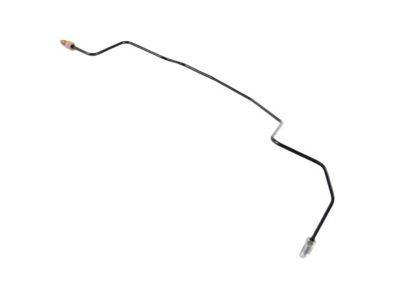
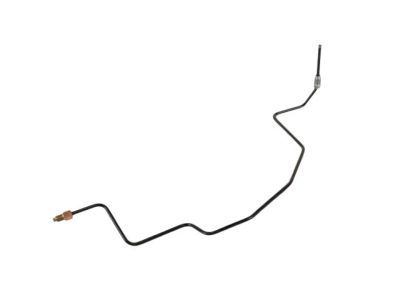
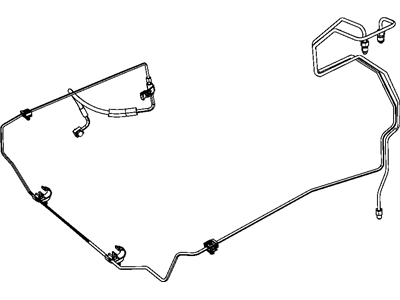
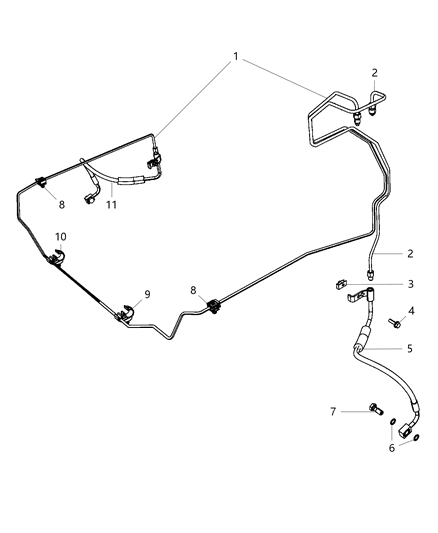
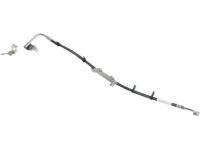
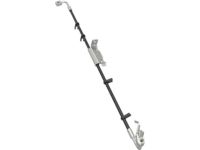
About every six months, with the vehicle raised and supported securely on jackstands, inspect the rubber hoses connecting the steel brake lines to the front and rear brake assemblies for cracks, chafing, leaks, blisters, and other damage, as these are crucial parts of the brake system. Use a light and mirror for a thorough check, and replace any damaged hose with a new one. To replace the front brake hose, disconnect the brake line from the hose fitting without bending the frame bracket or brake line, detach the integral hose bracket from the frame, remove the inlet fitting bolt from the brake caliper, and separate the hose from the caliper, discarding the sealing washers. Install the new hose by attaching it to the caliper with new sealing washers, tightening the inlet fitting bolt, and ensuring the brake line threaded fitting is not yet tightened. Securely install the integral hose bracket to the frame, then tighten the brake line threaded fitting. Ensure there are no kinks in the hose and that it does not contact any part of the suspension, checking by turning the wheels to the extreme left and right positions. For the rear brake hose, disconnect it at the frame bracket using a back-up wrench, remove the U-clip, and separate the female fitting from the bracket. Disconnect the hose at the junction block, then attach the new hose to the junction block and tighten the fitting securely, ensuring the installation did not loosen the frame bracket. Fill the master cylinder reservoir and bleed the system. When replacing metal brake lines, use the correct steel parts and avoid copper tubing. Prefabricated brake lines with flared ends and installed fittings are available at auto parts stores. Ensure the new line is securely supported in the brackets and has adequate clearance from moving or hot components. After installation, check the master cylinder fluid level, add fluid as necessary, bleed the brake system, and test the brakes carefully before driving the vehicle in traffic.