My Garage
My Account
Cart
Genuine Chrysler Turbocharger
Turbo- Select Vehicle by Model
- Select Vehicle by VIN
Select Vehicle by Model
orMake
Model
Year
Select Vehicle by VIN
For the most accurate results, select vehicle by your VIN (Vehicle Identification Number).
9 Turbochargers found
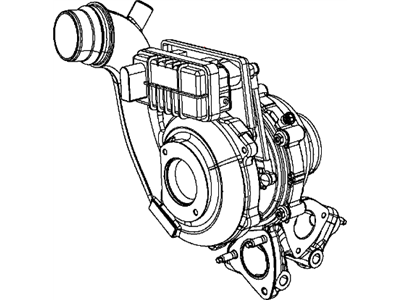
 Product Specifications
- Replaced by: RLX48161AA
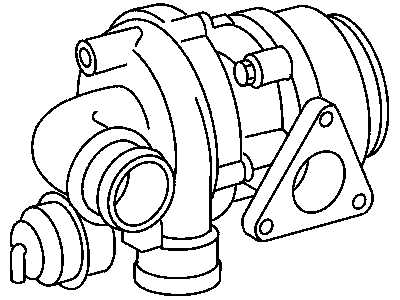
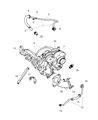

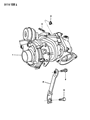 Product Specifications
- Other Name: Turbo Charger; Turbocharger
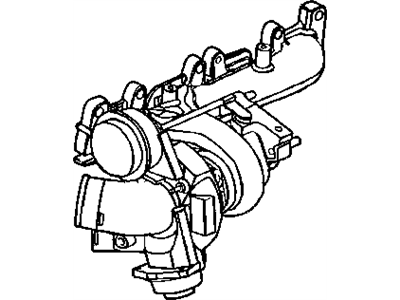
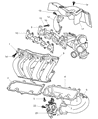 Product Specifications
- Replaced by: RL898546AB
- Product Specifications
- Other Name: Turbo Charger; Turbocharger
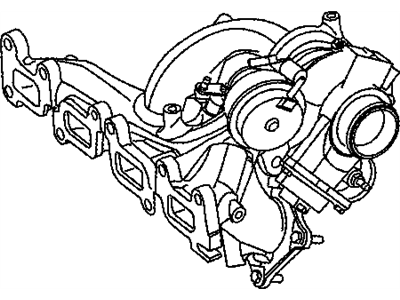
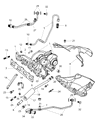
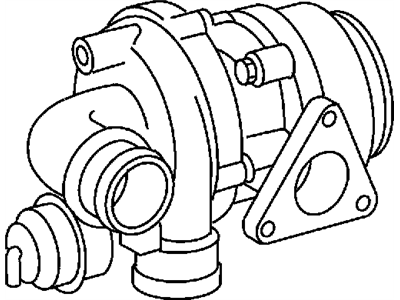
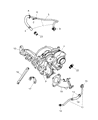
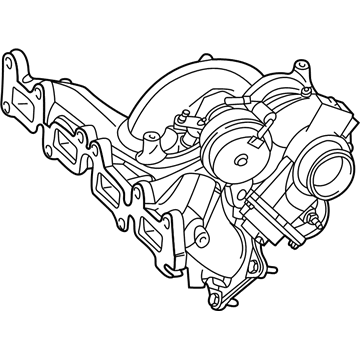
 Product Specifications
- Other Name: Exhaust Manifold
- Replaces: 68064587AA, 4884234AC
Chrysler Turbocharger
Our website has a huge selection of Chrysler Turbochargers at the optimal prices in the industry. If you need any genuine Chrysler Turbochargers, we ship them to your door step as we offer a fast delivery service. In addition, all OEM parts are backed by the manufacturer's warranty.
Chrysler Turbocharger Parts Questions & Experts Answers
- Q:What is the function and importance of a turbocharger on Chrysler PT Cruiser?A:A turbocharger compresses the air that enters the engine forcing the injection of more fuel, this boosts the horsepower and cures the problem of the car lagging at high altitude. It has a housing in which there are two turbines, one at the ends of the same axis, where the first is exposed to the hot exhaust gases and the second, known as the impeller, compress the entering air. The compressed air is heated and then ducted to a charge air cooler to cool the air and thus facilitate...combustion, enhance power output and emission. Boost levels are controlled by wastegate where at high engine revs, the boost is limited at some level by allowing exhaust gases to bypass the turbine. The turbocharger is cooled by the coolant supplied by the supply and return lines associated with the engine. Despite this, it is a rather uncomplicated device, and disassembling and overhaul should be done with special tools, so it is best to leave the servicing to the professionals while some inspections can be done at home, for example, if the examined part shows the signs of cracks or bearings wear. Any change of the acoustic note of the turbocharger therefore needs to be investigated because any strange note should be viewed as evidence of malfunction and the intake duct as well as the compressor wheel ought to be checked to ensure that it moves freely. Engine oil under pressures, filtered and cooled is supplied to the turbocharger through a supply line and the waste oil is recirculated to the crank case. Disruptions or pollution of the oil supply are dangerous, and soot on the outer walls of the housing can mean that the return line is clogged. When through major engine bearings, it important to ensure that the turbocharger oil passage is supplied with clear oil.