
My Garage
My Account
Cart
Genuine Jeep Grand Cherokee Parking Brake Shoe
Emergency Parking Brake Shoe- Select Vehicle by Model
- Select Vehicle by VIN
Select Vehicle by Model
orMake
Model
Year
Select Vehicle by VIN
For the most accurate results, select vehicle by your VIN (Vehicle Identification Number).
5 Parking Brake Shoes found
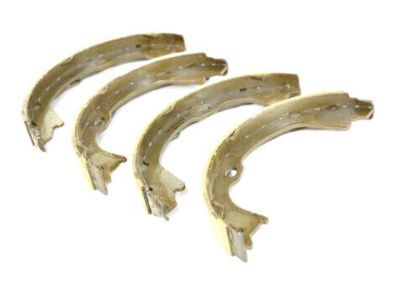
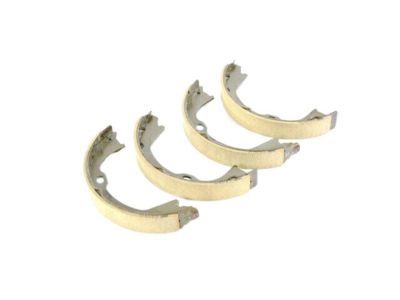
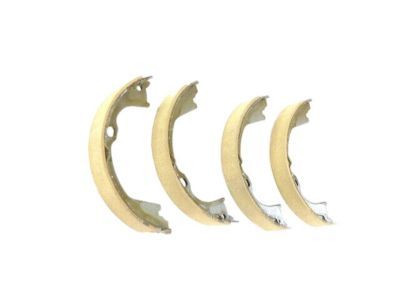
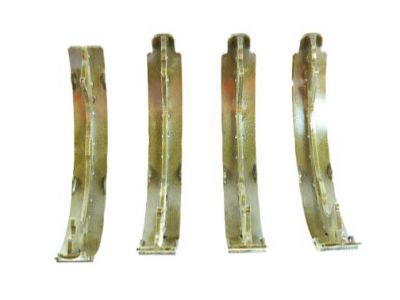
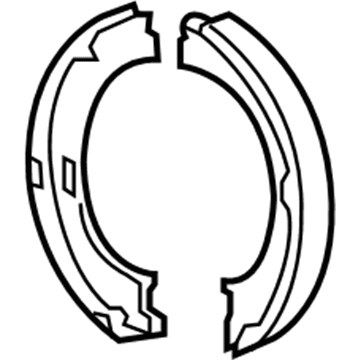
Jeep Grand Cherokee Parking Brake Shoe And Lining Kit
Part Number: 4560176AA$146.25 MSRP: $217.00You Save: $70.75 (33%)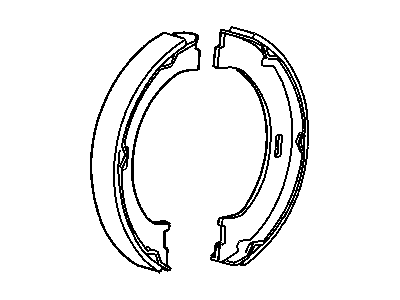
Jeep Grand Cherokee Shoe And Lining Kit Drum
Part Number: 5086930AA$145.13 MSRP: $218.00You Save: $72.87 (34%)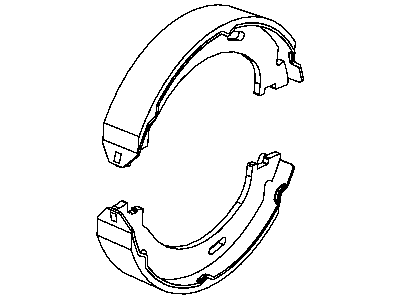
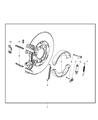
Jeep Grand Cherokee Parking Brake Shoe And Lining Kit
Part Number: 5086930AB$145.13 MSRP: $218.00You Save: $72.87 (34%)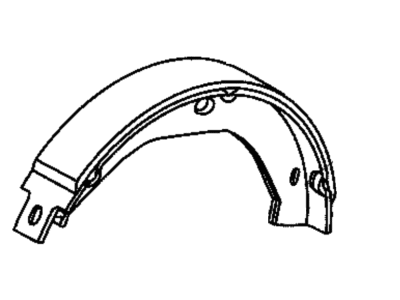
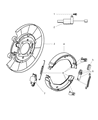
Jeep Grand Cherokee Parking-Rear Brake
Part Number: BHKP7306$26.72 MSRP: $34.01You Save: $7.29 (22%)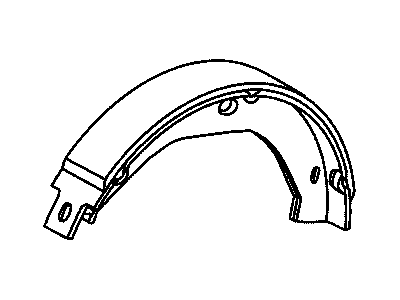
Jeep Grand Cherokee Parking Brake Shoe
Thus, the Parking Brake Shoe is a very important component in Jeep Grand Cherokee car since it holds the wheels of the parked car. This is done through the use of brake lining that rubs on the internal periphery of the drum expending friction to immobilise the wheel rotation once the parking brake is pulled. Year after year different styles of Parking Brake Shoe have been used in Jeep Grand Cherokee cars with the hope of improving on the performance of the car and its dependence. As the basic mechanism is concerned, there could be slight variations in the materials used or the design implemented in the particular firment in question, which has to be attributed to improvements in automobile engineering. In general, the Parking Brake Shoe is critical components that make the Jeep Grand Cherokee stand still and secure whenever parked.
Looking for affordable and high-quality auto parts? Then you have already arrived at the proper online shop. We offer all Jeep Grand Cherokee Parking Brake Shoe at great affordable prices. Moreover, all genuine Jeep Grand Cherokee Parking Brake Shoe come with a manufacturer's warranty. In the long run, you would realize you have saved a lot of trouble and money with OEM parts from here.
Jeep Grand Cherokee Parking Brake Shoe Parts Questions & Experts Answers
- Q:How to replace the Parking Brake Shoe and adjust the parking brake on Jeep Grand Cherokee?A:Take off the Brake Disc, and in case you need to, remove the hub and bearing assembly; it is important to known that the shoes can be replaced without removing the assembly, but there will be little room. Apply and remove brake system cleaner to and from the brake parts. The adjuster is to be placed in its minimum position, then the remove the adjuster spring, return spring, adjuster, lower shoe hold-down clip, pin, and shoe, then the upper shoe hold-down clip, pin, and shoe. Remove the backing plate and polish it well, apply high temperature grease on the brake shoe contact points. Unscrew the fastener which clamps the parking brake cable on the knuckle and pull it sufficiently to separate it from the actuator which should also be inspected for signs of wear, and screw it back into position. Insert the upper shoe and hold down pin in position while simultaneously activating the brake actuator; finally put down the upper shoe hold-down clip. Do the same for the other pieces of the shoe, and other hold-down pin and finally the lower shoe hold-down clip. Apply oil to the adjuster threads before fitting the adjuster, the return spring and the adjuster spring in their rightful places. Screw in the brake disc and the caliper followed by the wheel and replace the shoes on the other rear wheel. When doing the above, make sure the two ends are complete and the wheels placed before you remove the rubber plug on the brake backing plate for the parking brake adjuster. Rotate the adjuster star wheel so that the shoes come in contact with the drum, but after this you reverse six notches which will give the appropriate clearance for reinstalling the rubber plug. Both brake shoes on the front wheel as well as the rear should be adjusted, the parking brake should also be engaged and one should ensure that it works correctly and if not the should be adjusted. Last, shear off the spinner, lower the vehicle and torque the wheel lug nuts to their proper setting.
Related Jeep Grand Cherokee Parts
 Jeep Grand Cherokee Parking Brake Cable
 Jeep Grand Cherokee Brake Bleeder Screw
 Jeep Grand Cherokee Wheel Cylinder
Browse by Year
2022 Parking Brake Shoe 2021 Parking Brake Shoe 2020 Parking Brake Shoe 2019 Parking Brake Shoe 2018 Parking Brake Shoe 2017 Parking Brake Shoe 2016 Parking Brake Shoe 2015 Parking Brake Shoe 2014 Parking Brake Shoe 2013 Parking Brake Shoe 2012 Parking Brake Shoe 2011 Parking Brake Shoe 2010 Parking Brake Shoe 2009 Parking Brake Shoe 2008 Parking Brake Shoe 2007 Parking Brake Shoe 2006 Parking Brake Shoe 2005 Parking Brake Shoe 2004 Parking Brake Shoe 2003 Parking Brake Shoe 2002 Parking Brake Shoe 2001 Parking Brake Shoe 2000 Parking Brake Shoe 1999 Parking Brake Shoe