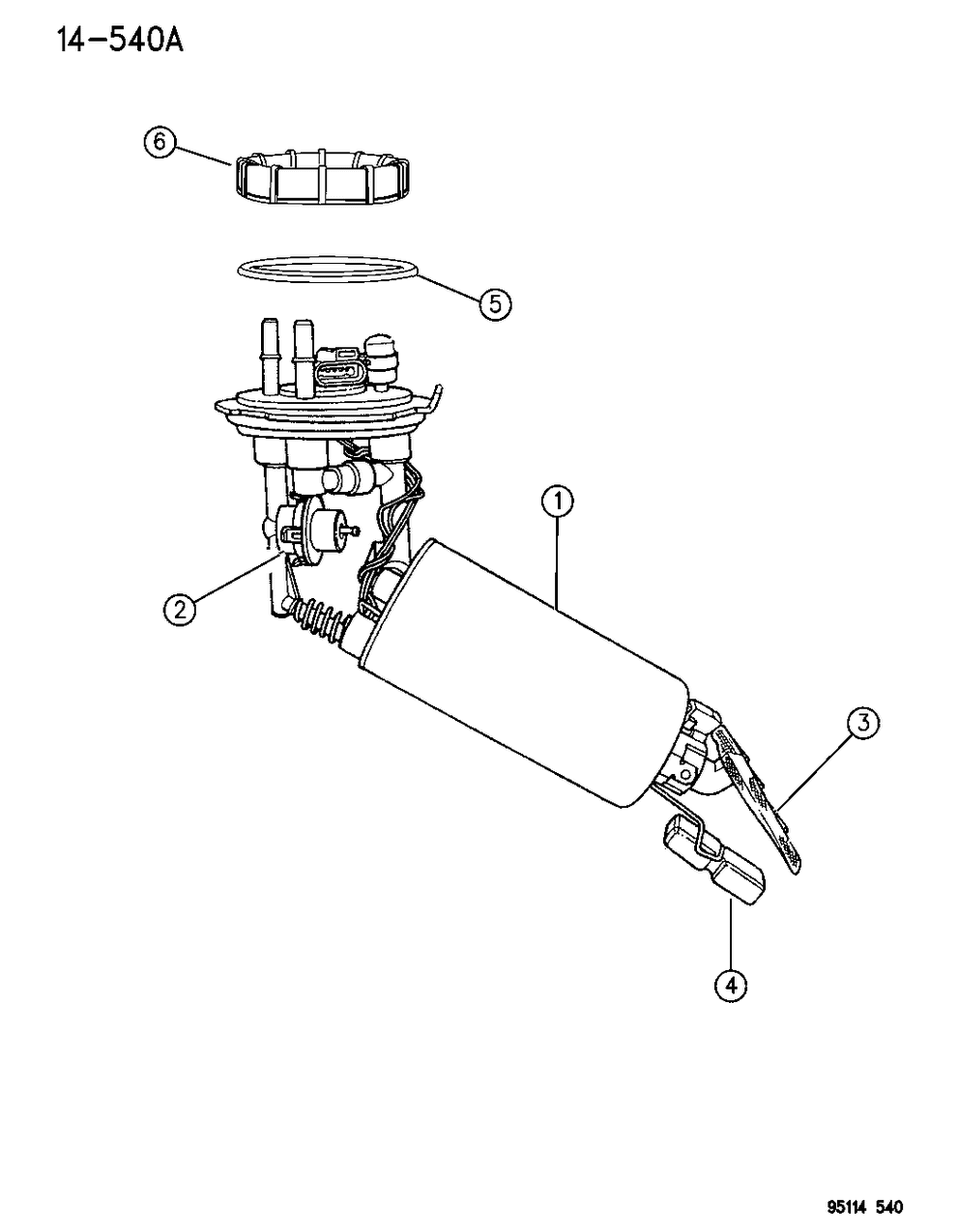
These vehicles use a 'returnless' fuel system in which the fuel pressure regulator is mounted within the fuel pump assembly which is installed in the fuel tank. Fuel pump operates when the engine is cranking or running only if the PCM receives ignition reference pulse from electronic ignition system; otherwise, the pump turns off after about second. To check fuel pressure a fuel pressure gauge and adapter set is necessary given the fact that V6 engines do not come equipped with a fuel pressure test port, thus, an adapter has to be fitted in between the fuel supply line and the fuel rail. If you find that fuel delivery seems to be low, you should start by checking all fuel hoses and hoses for signs of leakage, And if you turn the ignition to the 'On' position, you should hear a 'whirring' noise at the fuel filler neck. If no sound is produced, one ought to examine the fuses affecting the pump, the pump itself, the relay and such circuits. Complete the fuel pressure relief procedure, connect the gauge to the test port on 4-cyl, engines or use the special adapter on 6-cyl. intake manifolds they are fast and easy. Lower pressure should be noted when the engine is started and key turn is off, kinks or restrictions in the fuel lines should be checked, fuel pressure regulator should be replaced if required and the fuel filter also. If no fuel pressure is reading, check the fuel pump and the relays. You can know this because to check for the leaks, one has to add pressure in the system and when one puts off the fuel injectors, if it loses pressure, then there is a leakage at the set injectors. If the pressure does not change, fuel pressure regulator could have to be replaced. Following the test, release fuel pressure and reconnection all the fittings. If the fuel pump does not operate then inspect the fuel pump relay to ensure that it gets the proper voltage of the battery. ASD and fuel pump relays will have to be checked to see if they are functioning correctly and this can be done by using a voltmeter to check for the presence of battery voltage on several terminals and using an ohm meter to test for resistance and continuity. If there are areas that went wrong, make the necessary swap of the parts that did not work as planned.