
My Garage
My Account
Cart
Genuine Jeep Wrangler Pressure Plate
Clutch Pressure Plate- Select Vehicle by Model
- Select Vehicle by VIN
Select Vehicle by Model
orMake
Model
Year
Select Vehicle by VIN
For the most accurate results, select vehicle by your VIN (Vehicle Identification Number).
2 Pressure Plates found
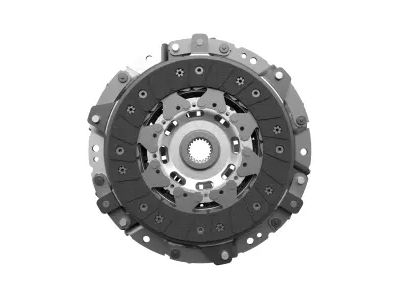
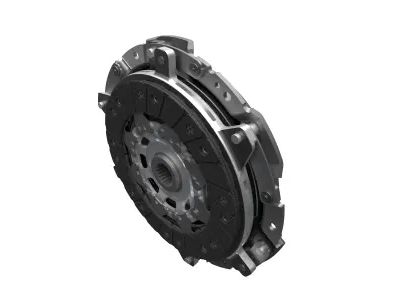
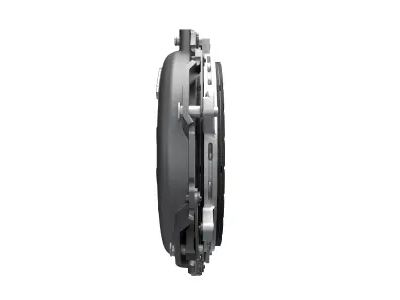
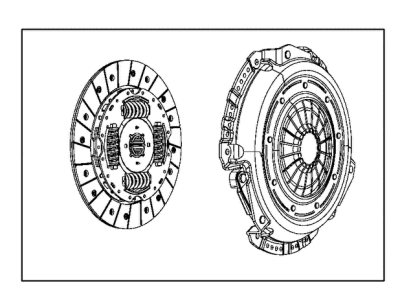
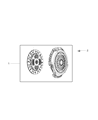
Jeep Wrangler Pressure Plate And Disc Clutch Kit
Part Number: 68273845AD$258.68 MSRP: $389.00You Save: $130.32 (34%)
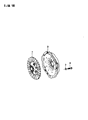
Jeep Wrangler Pressure Plate
A Jeep Wrangler uses the Pressure Plate to function as a crucial clutch assembly element because it controls clutch disc connection and disconnection from the flywheel. Through its clamping mechanism the Pressure Plate effectively enables the smooth transmission of engine power to the transmission system. A drive through the clutch pedal activates the Pressure Plate function which enables changes between gear positions. The Wrangler models utilize three different Pressure Plate varieties which include diaphragm and both borg and beck and long style designs. Users require fewer efforts on the pedal because the cone-shaped belleville spring on the diaphragm Pressure Plate enables its smooth operation during everyday driving. The borg and beck together with long style plates function as 3 finger Jeep Pressure Plates through their coil spring and lever system which delivers durable performance for high-performance as well as intensive tasks. Different driving situations require different automatic transmission Jeep Wrangler replacement parts since these devices exhibit distinct assembly principles and operational features during their function.
Looking for affordable and high-quality auto parts? Then you have already arrived at the proper online shop. We offer all Jeep Wrangler Pressure Plate at great affordable prices. Moreover, all genuine Jeep Wrangler Pressure Plate come with a manufacturer's warranty. In the long run, you would realize you have saved a lot of trouble and money with OEM parts from here.
Jeep Wrangler Pressure Plate Parts Questions & Experts Answers
- Q:How to remove, inspect, and reinstall the Pressure Plate on Jeep Wrangler?A:Driving access to the clutch components is usually realized whilst the transmission is removed; although the engine remains in the vehicle. This means that if you are doing a major over haul of the engine of your car it will be recommended that you also check the clutch and replace and damaged or worn out part of it. As clutch components are much cheaper than the amount of work necessary to reach them, replacement is justified in any case when the engine or transmission has been pulled, unless these parts are new or in very good shape. Start with the removal of the transmission while supporting the engine properly, ideally with an engine lift or you could use a jack in combination with wood piece to support the oil pan. When removing, hold the clutch disc with the clutch alignment tool. Look for index marks at the flywheel and the pressure plate, if there is none then draw your own index marks when you are reassembling the scraper. Turn the bolts of pressure plate to fly wheel successively in cross wise manner until all pressure of the spring is released and then take out the pressure plate, clutch disk entire assembly. All parts, particularly flywheel, must be examined for cracks or defects; clutch disc lining must have a lining above the rivet heads at least 1/16 inch thick. Ensure this pressure plate is not worn out or damaged and replace it if it is. Ensure that on the flywheel and the pressure plate for instance, have not any oil or grease on the machined surfaces before they are installed. Insert the clutch disc and the pressure plate against the flywheel and use an alignment tool, to ensure the clutch disc is sited correctly. Turn the pressure plate to flywheel bolts to just past snug while realigning them and then torque them to the specified mark in a star type pattern. Apply high temperature grease to the inner groove of the Release Bearing and the transmission input shaft bearing retainer, before reinstallation of the clutch release bearing and all disassembled parts and fasteners of the transmission to torque specification.


