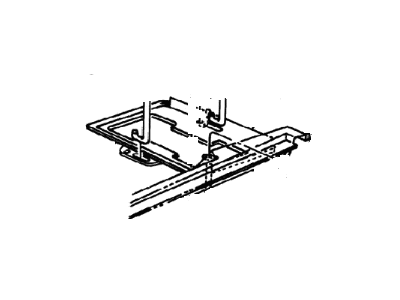
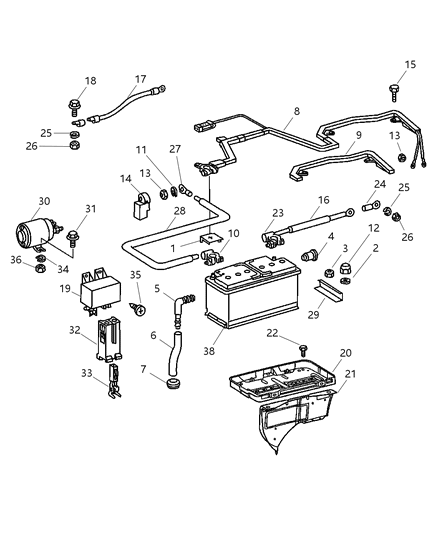
It is mounted on a raised deck inside the engine compartment, the general maintenance involves checking the level of electrolyte by eye as there are low and high level indicators on the plastic case. The electronic voltage regulator maintains the battery fully charged at all times but prevents overcharging of the battery, thus requiring less frequent electrolyte topping, but one has to monitor for leaks or faults, preferably weekly. If topping up is required, distilled or purified water only should be used; the procedure entails initiation of battery cover, retracting all plugs of the cells, and making sure the level lies between the two marked lines. It is recommended to routinely assess the security of the battery lead terminals and apply some petroleum jelly to avoid development of corrosion; remove any white fluffy thing which is corrosion with ammonia or baking soda solution. The two things that can be fatal are never to turn off a battery lead while the engine is running or ever reverse the leads. It is possible to use the trickle charger without the battery being removed but the leads from the vehicle has to be disconnected. Minimally and preferably do not use naked flames or smoke within a proximity of a battery, particularly when charging due to the blowing up of gases produced. In boosting a battery from another vehicle, ensure the positive wire of the rescue vehicle is connected to the positive terminal of the discharged battery and negative to any good connection on the engine whichever is positive connect first once the engine has started remove the negative cable of the discharged vehicle. It is advised to protect the battery cell vent plugs with a cloth during terminal connecting operations because sparks may arise. Whereas today few people check battery water, having a hydrometer is desirable in case one has to find out whether there is one cell which is discharged or to make sure that the battery is fully charged. The specific gravity of the electrolyte for fully charged and fully discharged conditions with reference to temperature, is also given, however, it should be pointed out that the addition of acid to a battery should never be required since the only causes for it to be lost are spillage which should always be made good by a dealer.