
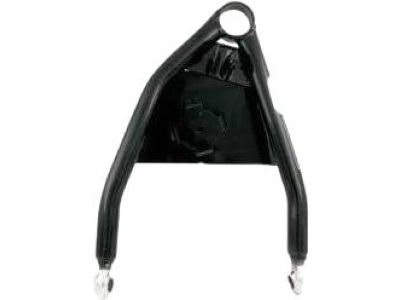
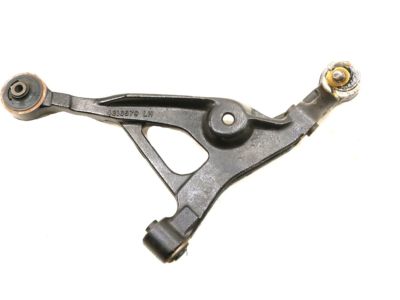
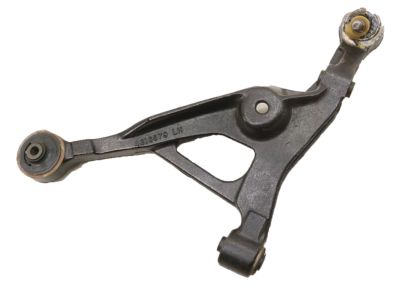
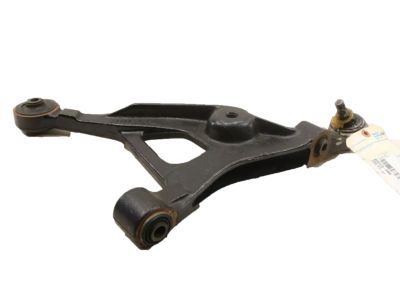
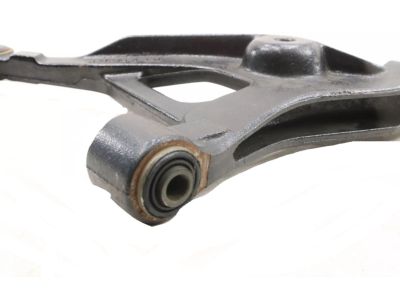
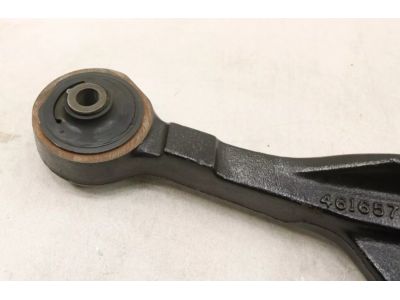
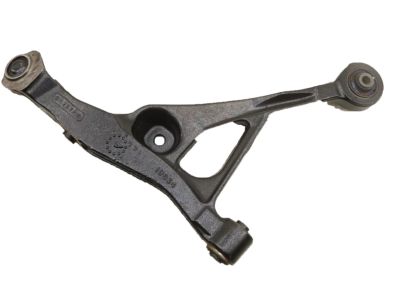
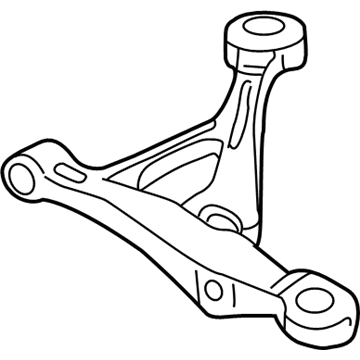
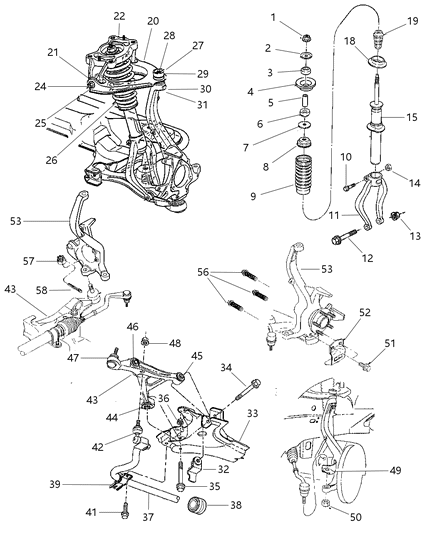
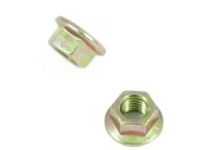
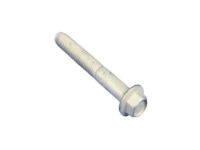
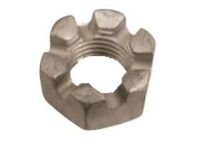
Loosen the rear wheel lug nuts, raise the entire rear of the vehicle and support it securely on jackstands. Remove the rear wheels. Remove the shock absorber clevis bracket bolt and nut from both sides of the vehicle. Remove the muffler support bracket from the rear frame rail. Remove the rear exhaust pipe hangar from the suspension crossmember, then ease the exhaust system while it drops down as far as possible. Remove the cotter pin and loosen the castle nut attaching the upper control arm balljoint to the knuckle. With the castle nut loosened a few turns, detach the balljoint stud from the knuckle using a puller. Support the suspension crossmember with a hydraulic jack and a wooden block on the jack. If the vehicle has ABS, remove the routing clips for the wheel speed sensor cable from brackets on the upper control arm. Remove the nuts and bolts on each side of the vehicle which attach both rear lateral links and both front lateral links to the knuckles. Remove the bolts attaching the suspension crossmember to the rear frame rails. Lower the suspension crossmember using the hydraulic jack a sufficient distance to remove the upper control arm pivot bolts which attach the control arm pivot bar to the crossmember. Remove the two upper control arm mounting bolts from the suspension crossmember. Remove the upper control arm from the crossmember. The upper control arm, bushings, and pivot bar are serviced as a complete assembly. Only the balljoint and balljoint seal are replaceable. Replace the balljoint and balljoint seal with the control arm removed from the vehicle. Installation is the reverse of removal. When installing the suspension crossmember, install a drift into the positioning holes to properly locate the suspension in the vehicle body. Tighten fasteners to the torque. Remove the drifts. Drive the vehicle to an alignment shop to check rear wheel camber and toe and adjust as necessary.