My Garage
My Account
Cart
Genuine Dodge Ramcharger Crankshaft
Crank Shaft- Select Vehicle by Model
- Select Vehicle by VIN
Select Vehicle by Model
orMake
Model
Year
Select Vehicle by VIN
For the most accurate results, select vehicle by your VIN (Vehicle Identification Number).
1 Crankshaft found
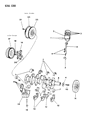
Dodge Ramcharger Crankshaft
The Dodge Ramcharger Crankshaft takes the up and down push of the pistons and turns it into the smooth spin that drives this SUV's wheels with dependable thrust. The Crankshaft rotates within the block, and connecting rods grip offset crank throws to turn the piston strokes into rotary force to feed the transmission and axles to achieve that. Dodge opted for specific cast iron and steel options throughout history based on expected torque. The early engines of Ramchargers applied sturdy cast-iron Crankshaft builds that were fit for moderate power production. Later high output Ramcharger trims received forged steel versions that could handle greater horsepower without flexing. The two Crankshaft types are perfectly balanced and, with regular oil changes, should last the life of the vehicle. Nevertheless, neglected lubrication allows dirt to score the journals and make them rattle. Given the heavy load on the component, any vibration from a Dodge V8 suggests journal wear and the need for replacement. Changing a Crankshaft is labor-intensive, especially with having to remove the engine and reseat the bearing caps, but this Dodge Ramcharger is trail-ready.
Looking for affordable and high-quality auto parts? Then you have already arrived at the proper online shop. We offer all Dodge Ramcharger Crankshaft at great affordable prices. Moreover, all genuine Dodge Ramcharger Crankshaft come with a manufacturer's warranty. In the long run, you would realize you have saved a lot of trouble and money with OEM parts from here.
Dodge Ramcharger Crankshaft Parts Questions & Experts Answers
- Q:How to check the end play of a crankshaft before removing it on Dodge Ramcharger?A:Before removing the crankshaft, check the end play by mounting a dial indicator with the stem aligned with the crankshaft and touching one of the crank throws. Push the crankshaft to the rear and zero the dial indicator, then pry it to the front as far as possible to check the reading, which indicates the end play. If the end play exceeds the specified limit, inspect the crankshaft thrust surfaces for wear; if no wear is found, replacing the main bearings should resolve the issue. If a dial indicator is unavailable, use feeler gauges by pushing the crankshaft to the front and slipping the gauges between the crankshaft and the thrust main bearing to measure the clearance. Loosen the main bearing cap bolts three-quarters of a turn until they can be removed by hand, checking for markings on the caps, which are usually numbered consecutively from front to rear; if unmarked, label them accordingly. Gently tap the caps with a soft-faced hammer to separate them from the engine block, using the bolts as levers if necessary, and take care not to drop the bearing insert. Finally, lift the crankshaft out of the engine, ideally with assistance due to its weight, and with the bearing inserts in place, return the caps to their original positions on the engine block and tighten the bolts finger tight.